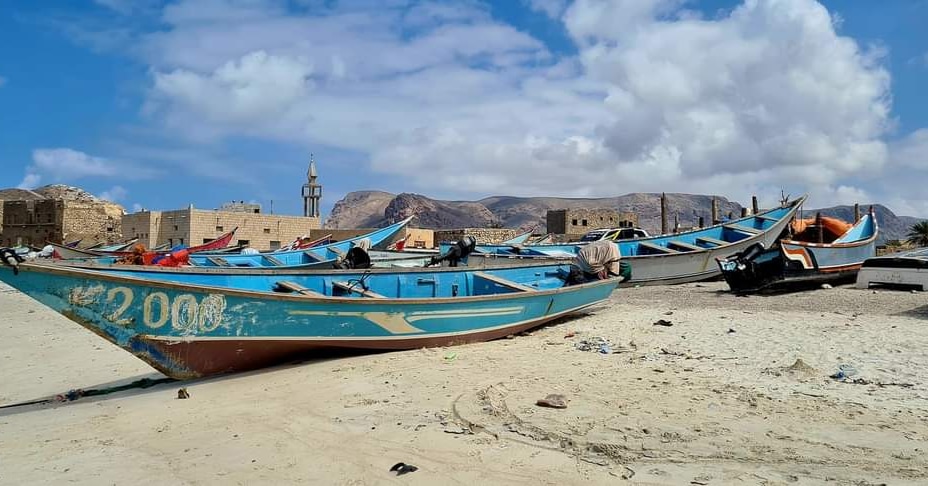
Long ago the Socotra Islands were a part of Africa and Arabia, now separated by the Gulf of Aden. Its long isolation period lasted for at least 20 million years favored evolution and origination of new species.
The Islands are a home to a great number of endemic species. All the land mollusks, 90% of the reptiles and a third of the plants can be only met in this area. Its population of endemic bird species is the biggest on the Middle East.
Owing to location at the northwest part of the Indian Ocean, east of the entrance to the Red Sea, the Islands are inhabited by exceptionally great variety of fish, corals and other invertebrates carried here by major ocean currents from nearby and far away seas.
Unique people
The Socotrans are cheerful and self-sufficient people with optimistic attitude to life in spite of severe living conditions. They speak a unique classical Semitic preliterate language, Socotri, that is very different from modern Arabic.
Isolated by seasonally bad weather and a lack of regular transport until recent years, the inhabitants of the Socotra Islands have not had practically influence from the modern world. Therefore, for survival the Socotra people have developed deep respect and understanding of their land and sea.
The Socotra Islands have global significance because of their evolutionary uniqueness, biological diversity and socio-cultural heritage. The Republic of Yemen with support of the United Nations and an alliance of governments implements a number of conservation and sustainable development programs, one of which is the Socotra Conservation Zoning Plan approved by the President of Yemen in 2002.The islands were recognized by the United Nations Educational, Scientific and Cultural Organization (UNESCO) as a world natural heritage site in July 2008. The European Union has supported such a move, calling on both UNESCO and International Organisation of Protecting Environment to classify the island archipelago among the environmental heritages.